Peace To Panic: How Ukraine’s War Has Shifted Europe’s Identity
The return of war in Europe is not just a political or strategic challenge — it is changing how people live, relate to one another and imagine the future.
Article
Article
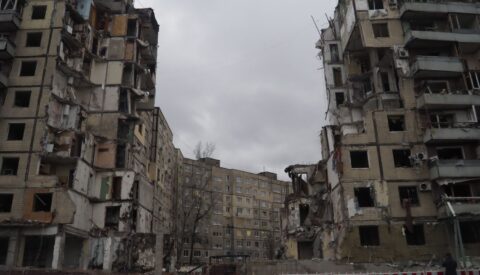
In February 2022, something extraordinary happened in European homes. Families who for decades had followed the news as a distant ritual suddenly found themselves glued to their screens watching tanks advance toward Kyiv. It was not just information they were consuming: It was the discovery that history, that force they believed had been tamed by prosperity and international law, had returned to Europe with a violence that seemed impossible.
Europeans then experienced something for which they lacked vocabulary. It was not exactly fear, although fear was present. It was not just geopolitical concern, although the strategic implications were obvious. It was the intuition that something fundamental in their way of inhabiting the world was changing irreversibly. Societies that had learned to think of the future in terms of growth, technology and rights suddenly found themselves imagining scenarios of war, rationing and survival.
This transformation is not limited to new security policies or institutional reorganizations. It is a metamorphosis that affects the very structure of human experience, altering our way of being in the world. What European societies are experiencing now is an ontological change that redefines what it means to be a person in the 21st century.
The return of uncertainty
German philosopher Martin Heidegger described humans as «Dasein», beings who look to the future, shaped by their past, and aware that they will die. But what happens when this awareness is forced into a context of intense militarization? What was once a philosophical reflection on mortality becomes a daily reality of political violence. Societies that Herfried Münkler calls «post-heroic» — where heroism and battlefield death had seemed distant — suddenly confront violent death as an immediate, tangible threat.
The German example is telling. The Zeitenwende speech by German Chancellor Olaf Scholz in 2022 signals not just a shift in foreign policy, but a transformation of national consciousness. Generations raised in postwar pacifism are now forced to think in military terms, organizing their collective future around the real possibility of war. The 100 billion euros set aside for rearmament is more than a budget line — it reflects a new reality, one in which violent death becomes a central consideration in national planning.
The way people relate to each other is changing
French philosopher Emmanuel Levinas, who experienced war as both a soldier and prisoner, highlights a key change: the collapse of intimacy. For him, ethics begins with the encounter with another person, but this requires keeping a private, personal space. European militarization weakens that privacy, creating a constant sense of surveillance. People start judging themselves and others through a lens of security.
In France, this focus on safety has turned debates that once centered on social issues— immigration, education, culture — into questions of internal defense. This isn’t just about government policies: the very way people relate to each other is changing. Hopes for social integration turn into security anxieties, cultural differences are seen as existential threats, and community bonds are reshaped according to a friend-versus-enemy mindset.
On the other hand, Heidegger’s concept of «Mitsein» — the idea that to exist is always to exist with others — is being replaced by a form of being-against-others, where social life revolves around threat and defense. For Heidegger, Mitsein isn’t just a sociological fact of living in society; it’s an existential structure that allows us to recognize others as equals in their very being. This structure breaks down when systematic suspicion becomes the dominant way people relate to each other.
Europe’s new existential reality
The most alarming aspect of this transformation is how quickly it has become irreversible. Unlike the slow militarization of the 20th century, which unfolded over decades, the current shift has occurred in just weeks. Europeans who in January 2022 lived in post-heroic societies were, by March, debating rearmament, continental defense and preparation for war. This rapid pace creates existential disorientation — a sense of losing collective identities before there’s been time to assess or protect them.
Recognizing the deep, human impact of this militarization is not just an academic exercise — it carries urgent ethical consequences. If militarization represents an irreversible transformation, then decisions about military readiness, social mobilization and the tone of public debate carry weight far beyond conventional strategic calculations. We are not merely rearranging defenses; we are reshaping the very experience of European life.
What aspects of European identity we are willing to sacrifice?
Understanding this process forces us to rethink the very meaning of security. It’s not just a matter of whether the level of threat justifies military readiness, or whether defense budgets are adequate. The deeper question is what aspects of European identity we are willing to sacrifice, what existential experiences we deem expendable, and which forms of coexistence we can afford to lose.
The transformation of European civil life raises a question that goes beyond geopolitics and strikes at the heart of civilization: Are there ways of life so precious they must be preserved, even at the cost of greater insecurity, or are some threats so grave that they justify irreversibly changing the people we aim to protect?
The answer is not found in strategic documents, but in the daily lives of citizens who, day by day, confront what it means to lose the innocence of peace.
This content is part of a collaboration agreement of ‘WorldCrunch’, with the magazine ‘Ethic’. Read the original at this link.