

Faith Filter — Sister Rosalía And TikTok’s Revival Of «Christiancore»
Faith goes viral as Gen Z reimagines devotion through hashtags and high fashion.
Article
Article
The latest aesthetic trend doesn’t come from the gym or the catwalk. It comes from heaven. On social media, the concept of the «contemporary saint» is taking off — with veils, silver crosses, and biblical phrases printed on T-shirts.
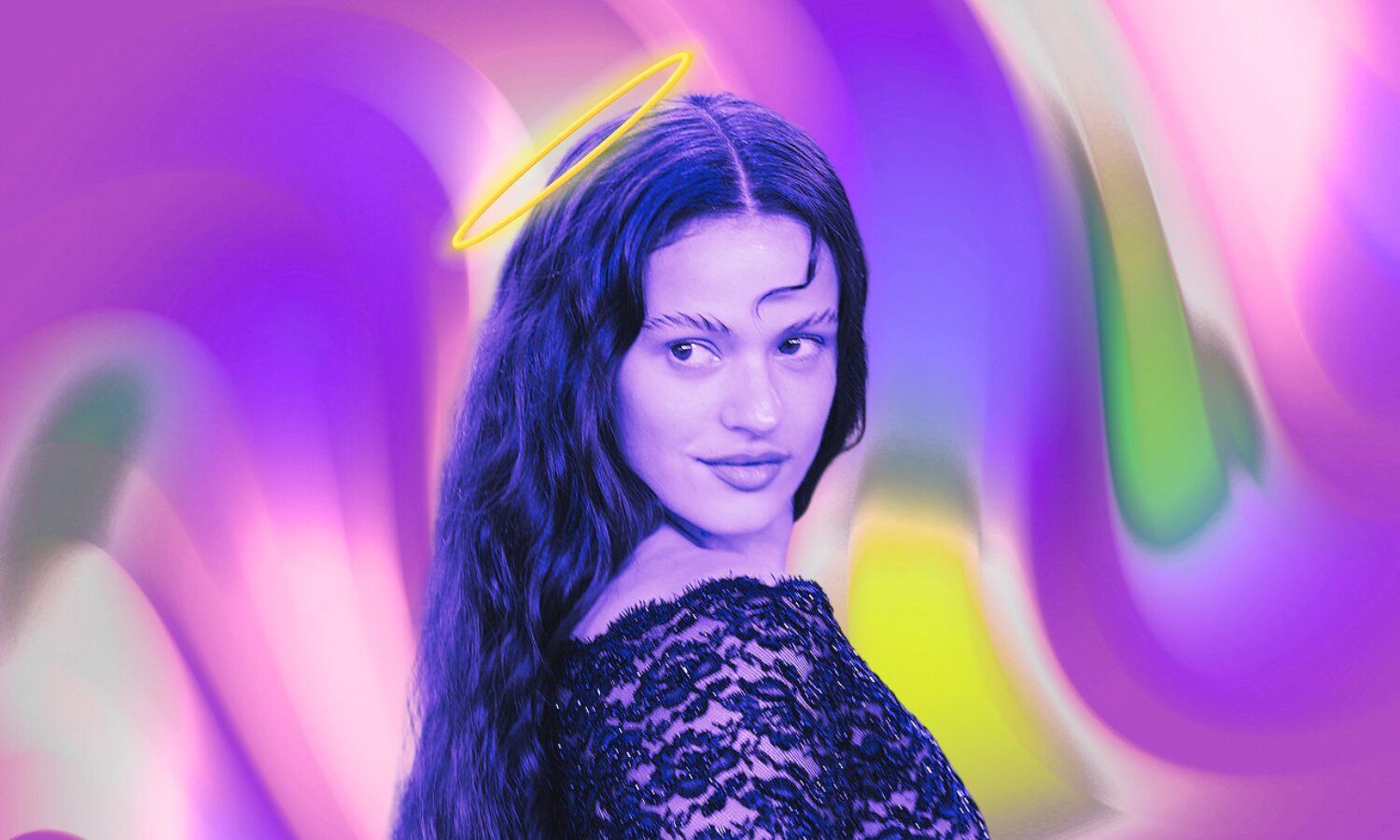
It’s called Christiancore, and it’s a mix of spirituality, irony, and a yearning for purity. Even Spanish pop singer Rosalía seems to have embraced it, offering recent imagery and the anticipation surrounding her upcoming album LUX that’s reignited interest in Catholiciconography.
The sacred has become a trend. And when faith becomes a filter, the line between devotion and performance starts to blur.
The term Christiancore began circulating on TikTok in mid-2023, fueled by young creators sharing images of the Virgin Mary, churches, and phrases such as «God’s favorite» or «Heaven sent». Media outlets like Highsnobiety and Dazed crowned it «the new aesthetic religion» of the moment — a mix of fervor, irony, and the search for authenticity.
In essence, Christiancore turns the symbols of Christianity — veils, crosses, white robes, and biblical verses — into a visual language. It’s a form of stylized spirituality that transforms faith into image and devotion into aesthetics, reflecting a collective desire to find meaning in a world dominated by appearances.
This is no coincidence. In a society saturated with stimuli — where every desire becomes content and every emotion becomes a story — Christiancore offers a symbolic pause: a gesture of visual contemplation. Its followers don’t just wear religion; they wear meaning.
Return of the sacred
Fascination with religion in pop culture is nothing new. From the so-called «Catholic era» of pop — joined by Madonna, Lady Gaga, and Rosalía with El mal querer — to the Heavenly Bodies exhibition at New York’s Metropolitan Museum in 2018, liturgical aesthetics have long seduced artists and designers.
Sociologist Émile Durkheim defined religion as the system that divides the world between the sacred and the profane — a structure that gives societies meaning. Today, that boundary is blurring: the sacred returns in aesthetic form, while the profane is spiritualized through algorithms.
Faith is displayed rather than practiced
Although institutional religious practice is weakening, faith itself persists in new forms. According to the Pew Research Center (2025), in a sample of 35 countries, an average of 83% of adults say they believe in God or a «higher being», while regular participation in religious services is much lower. In Western Europe, weekly attendance is dropping below 25%. Globally, about 76% of the population identifies with a religion, but only a minority remain active practitioners.
This paradox reveals that while devotion may be declining, the aesthetics of the sacred are resurging — as cultural heritage and symbolic resource. Their visual power is no accident: for centuries, the Church used art to teach, move, and inspire. In the Baroque era, painters such as Murillo and Zurbarán brought the divine closer to the human, transforming faith into a sensory experience through light, color, and composition.
As the Prado Museum notes, sacred images once educated a largely illiterate society. This visual tradition shaped Catholic sensibility — and today it reappears, transformed by digital culture. Temples have become screens, altars have become algorithms, and symbols of faith are being reimagined as filters that promise meaning in an image-saturated world.
Sociologist Max Weber saw religion as a driving force in the rationalization of the world — a way of giving social life order and meaning. Today, the reverse is true: mystery has become spectacle. We are witnessing an aestheticization of the sacred, where the transcendent is turned into image, the spiritual into style, and faith is displayed rather than practiced.
And yet, Christiancore’s success doesn’t speak of cynicism but of absence — of a hunger for transcendence in a culture that has forgotten how to pause.
Saints of the algorithm
Amid today’s constant noise — social media, deadlines, crises, wars — a new aesthetic seeks silence: a visual spirituality that turns exhaustion into contemplation. The veil, the crucifix, and the monastic white become symbolic refuges from digital overload, as if dressing like a saint were a way to reconnect with what’s essential.
In this context, Rosalía embodies the shift from pop star to mystical figure. Her recent imagery — part nun, part muse, part penitent — tied to the anticipation around LUX, is not devotion but exploration. As she confessed in her interview with Radio Noia, she’s drawn to «the idea of living in seclusion, like a nun, focused only on creating and finding peace».
A statement that captures the essence of Christiancore: the search for disconnection and meaning amid saturation.
Faith, identity, and the market
Spirituality, of course, also reaches the market. Within the core ecosystem — shorthand for aesthetic subcultures such as cottagecore, balletcore, or blokettecore — each trend translates a collective emotional state. Christiancore simplifies faith and turns it into visual language: portable, wearable, accessible, and endlessly replicable.
The altar has been replaced by the front-facing camera
Here, religion no longer structures social life but fragments into visual micro-experiences. Faith becomes aestheticized and consumed; transcendence is privatized, community dissolves, and the spiritual becomes accessory.
As Pierre Bourdieu warned, the religious field has been reconfigured into a symbolic one — where faith is measured in cultural capital, and aesthetics replace dogma.
In the age of personal branding, religious symbols no longer point to heaven but to the self. The crucifix becomes an accessory; holiness, a pose. The altar has been replaced by the front-facing camera. The market has understood that faith, too, can sell.
Brands of so-called «faith-based apparel», such as God is Dope and Elevated Faith, are flourishing, combining evangelical language and streetwear aesthetics: Gothic fonts, embroidered angels, and God-themed slogans. The logic of «drops» — limited-edition releases that create desire through scarcity — turns the divine into a product.
From noise to contemplation
But Christiancore is not a passing fad; it’s a symptom. It reflects an era exhausted by overstimulation, seeking transcendence amid screens. Studies show that Generation Z has lost faith in institutions — political, media, religious — but not in belief itself.
According to the Gen Z & Grievance report, 58% of those under 30 express a «moderate or high degree of grievance» toward institutions, revealing deep disaffection. Yet the Springtide Institute notes that over 70% of young people still consider themselves spiritual.
This gap between disillusionment and longing explains the rise of aesthetic languages like Christiancore: attempts to dress up the void of meaning with symbols that still promise redemption.
Philosopher Byung-Chul Han put it succinctly in Non-Things: “The more information we produce, the less meaning we have.” In a world saturated with images, Generation Z searches for symbols that restore depth to gestures. The sacred becomes aesthetic, faith becomes visible, and fashion turns into a new spiritual language.
Rosalía and the followers of this trend don’t wear religion — they wear meaning. They remind us that even in the age of algorithms, beauty and faith share the same root: the search for meaning.
And perhaps that’s where fashion today can find its purpose.
This content is part of a collaboration agreement of ‘WorldCrunch’, with the magazine ‘Ethic’. Read the original at this link.